
What America thinks it knows about skilled work is wrong.
The industries doing the work are finally telling the real story.
The Alliance exists to tell what the reputation has been missing: that skilled work runs on real applied science — learned through training, not picked up by rote; that the people who do it are curious, inquisitive problem-solvers; and that the economy AI is building cannot be built without them.
Our programs are the delivery system. Each one puts the story in front of a different audience — students, families, educators, policymakers, and the communities that shape who thinks they belong in this work — in a format that audience actually responds to.
Science Mapping: where the new story begins.
Most people have never asked what specific scientific concepts are taught in a CTE classroom. That question is at the center of everything we do — because the answer, we are finding, is remarkable.

The CTE Teach-In: where the story comes to life — and reaches the families who matter most.
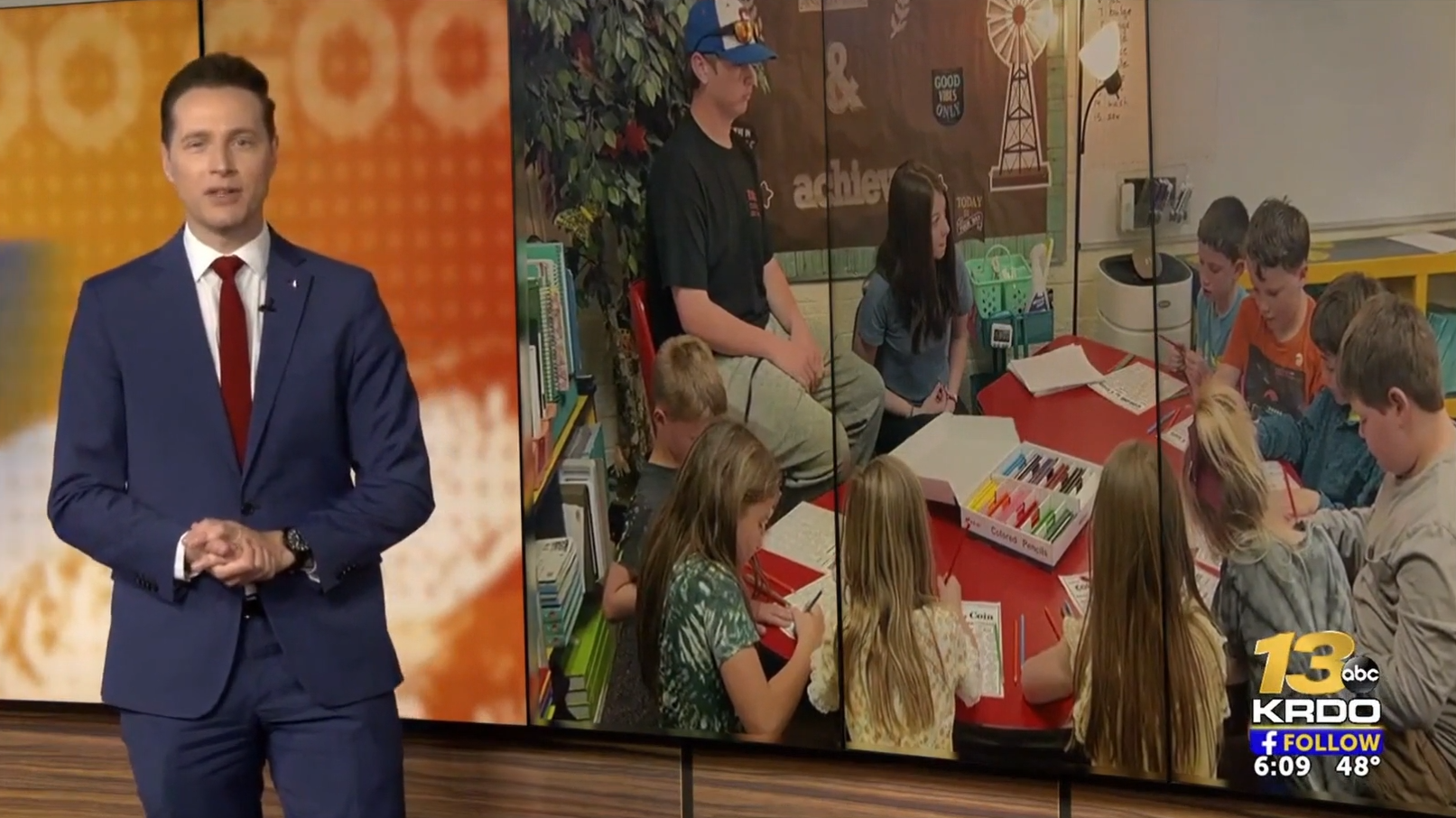
CTE students — future welders, process technicians, electricians, and builders — step into elementary and middle school classrooms to teach hands-on applied science lessons drawn from a growing Alliance curriculum and delivered by the students themselves.
In about an hour, younger students see that the science in CTE is real and rigorous, while CTE students practice leadership, communication, and collaboration in front of a live audience.
The Teach-In is also the most effective grassroots media campaign in CTE advocacy. Because events are held simultaneously across dozens of local schools and communities, local television news covers them at a rate no national awareness campaign can match — earning coverage from network affiliates in every region of the country, across markets ranging from major metros to rural communities that national campaigns never reach.
That is not a communications bonus. It is the point. Workforce pipelines are built community by community, and the Teach-In reaches the families, students, and local leaders who make pipeline decisions at exactly that level.
Each Teach-In leaves a trail of evidence: student portfolios with formal recognition, classroom teachers reflecting on how likely they are to bring applied science into future lessons, and local stories that travel through media and social channels.
The CTE Science Alliance convenes leaders from trade associations, major employers, education institutions, and policy organizations to examine emerging research, compare workforce challenges, and align around the science inside skilled work.
Convening is not a new idea. What the Alliance convenes is.
These are curated roundtables of senior leaders in Washington and beyond — the first convenings of their kind to bring industries that rarely share a table together around a shared workforce narrative rather than sector-specific agendas. These are not conferences. They are working sessions designed to produce insight and action that no single industry could generate alone.
The convenings are where the unified voice of the Alliance is actually built. An industry that has historically spoken in fragments cannot speak in one voice by accident — it requires the rooms, the relationships, and the discipline of shared strategy. The convenings are those rooms.
Infographics, Reports & Earned Media: how the story travels.
Science maps and Teach-In moments become the raw material for a sustained public campaign: visual products, industry-tailored reports, op-eds, and earned media designed to carry the Alliance's message across industry communications, social channels, and policy conversations.

The CTE Science Alliance documents the applied science inside CTE pathways: clear, visual breakdowns of the scientific concepts in each course. A process technology program draws on thermodynamics, fluid mechanics, and chemical reaction principles. Construction programs embed structural physics, materials science, and soil mechanics. Welding programs cover metallurgy, electrochemistry, and heat transfer. Electrical programs run through physics, power systems, and increasingly, the high-density DC architecture of the AI infrastructure buildout.
These maps give educators and families a concrete, evidence-based answer to "is this rigorous?" They give industry partners a shareable asset that links their talent pipeline to scientific knowledge. They give policymakers a clear view of the STEM value already embedded in CTE.
And they give the Alliance the factual foundation for everything else we do. Every Teach-In lesson, every infographic, every convening conversation, every op-ed traces back to the science mapping. It is the source material from which the unified industry story is told.
Why local beats national.
National observances like CTE Month build broad awareness and give the field a shared moment to celebrate skilled work. The CTE Teach-In does something different and complementary: it generates measurable, community-level impact in the specific markets where workforce pipelines are actually built.
The difference shows up in local media coverage — the single best proxy for whether a message reached families and students at the ground level. Local television news still reaches working families most reliably, and it is the hardest earned media to generate consistently. The Teach-In does it campaign after campaign, across markets from major metros to rural communities — earning coverage from network affiliates in every region, retweets from U.S. Senators, shout-outs from state treasurers, and endorsements from superintendents and principals who rarely amplify anything.
National campaigns produce national reach. The Teach-In produces local proof at scale.

Every infographic is built from the science mapping work and designed to be industry-specific, accessible, and shareable. A petrochemical association gets a visual that highlights the science inside process technology. A construction association gets one that surfaces the physics and materials science in their trades. A data center coalition gets one that maps the electrical, thermal, and fluid systems science inside hyperscale facility operations. The underlying science stays rigorous; the framing is tailored to the audiences that matter most.
Beyond infographics, the Alliance develops op-eds, commentary, and earned media placements that put the unified industry story into the national conversation — giving Founding Circle partners a continuous stream of content they can use in member communications, on Capitol Hill, in recruitment materials, and in their own media outreach.
The infographics are not the end. They are the means. The end is a story about American skilled work that the country finally hears because an entire industry is telling it, together.